
The Weight of Words
Words fascinate me. Even names. For as long as I can remember, I’ve loved collecting them and dissecting them. Sourcing their origin and root, exploring their journey of meaning and deepening my understanding of the feeling evoked in their use.
I didn’t study languages or etymology, and I’ve had my fair share of foibles, where I employed one word when my intention was to use another. I’ll speak of English, since it’s the only one I know intimately, and say there are a lot of options.
Synonyms are vast and varied, and while the overarching definition may well be the same, the connotation, the context, the purpose of these words is subtle but significant. Even slight distinctions can sling a conversation or intention in a totally different direction than desired.
Choosing words when writing and speaking is, to me, just as meticulous as decorating my home or selecting an outfit for the day. Redundancy can be useful when the intent is to highlight a theme or feeling you want your recipient to latch onto, but it can also be an indicator of a poorly examined thought. A case made by repeating oneself may be indicative of there being no case at all. This is just one small example of my thoughts when crafting articles, blogs, and captions.
Language, History, and a Little Backstory
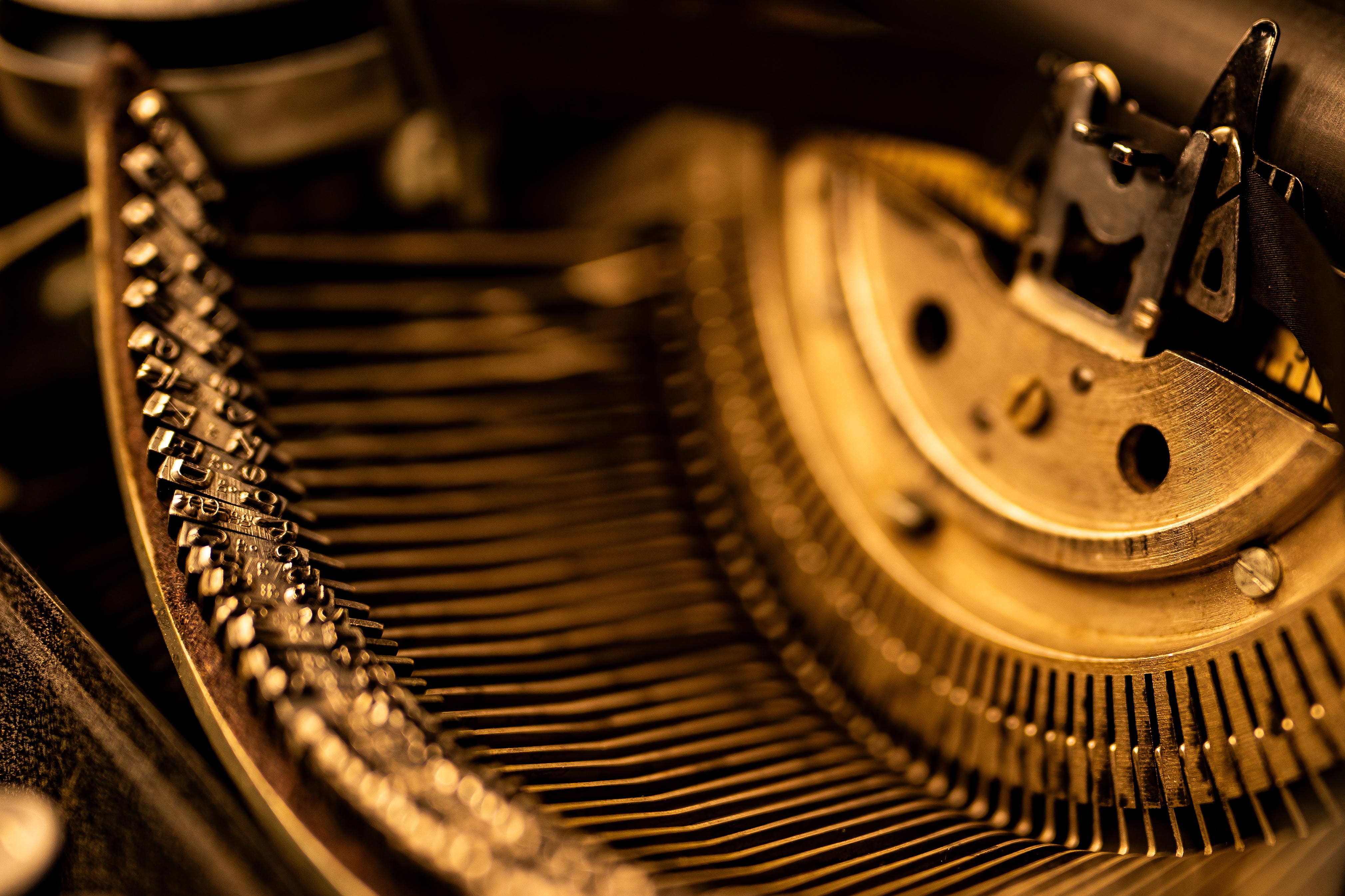
I feel about writing the same way I feel about a lot of things—as an observer and perhaps even romanticizer of it’s history. We’ve reduced it down to formulas and algorithms that aren’t without merit or research backing their effectiveness. But we’ve lost the soul.
Language isn’t new. Humanity has been sculpting language for a long time. Spoken and written. Speaking showed up first, naturally, around 100,000 years ago. The first script showed up as cuneiform around 5,000 years ago.
Again, not having studied the origin of speaking, I can only assume how we got here. I imagine it followed the most classic of human patterns: trial and error. At some point, using our vocal chords to produce a sound that someone else comprehended, paired with gestures and facial expression, allowed our knack for pattern recognition to encourage repetition and eventually new sounds.
Writing feels like it may have been achieved more by consensus. It’s certainly the less urgent of the two modes of language. Calling 911 is still encouraged over texting it, for instance. Speech may have been necessitated by survival, while writing (if I remember the scenes of Spaceship Earth at Epcot with any accuracy) was proliferated by civilization’s progress.
Why This Matters Now
“Why is she writing about writing?” you might be asking yourself at this point.
Well, frankly, it’s because of its popularity and ease of distribution today. From an educational standpoint, more people can write. From a distribution standpoint, more people can get their work published and seen. Both are wonderful things that, even 20 years ago, were not so.
Though, as a user of AI (to produce captions and correctly formatted versions of my thoughts, depending upon the platform I’m using) I can see that it’s becoming flat. Lifeless. Redundant.
I cringe when I see that the captions I posted look just like everyone else’s. Lists containing three points. No more. No less. Em dashes replacing colons or parentheses. Comparative “it’s not [blank], it’s [blank]” statements in blogs, websites, posts, and more.
Guilty as charged.
Writing has become like every other tool—something we’re compelled to optimize. Probably because we’re trying to sell something. Fortunately for us, research has been done showing the written-content equivalent of ideal shelf locations. Hence the formulaic, repetitive, and frankly unoriginal way we’ve all come to sound.
Consistency vs. Constancy
We’re rushing through, trying to produce content because we’re told to be consistent—and what have we done? We’ve misinterpreted words.
We hear “consistently.”
We think “constantly.”
I have to constantly be posting to be seen. To feel relevant. To obtain more followers or make more sales.
Over time, consistent may begin to mean constant if we’re not careful. It already appears to be happening. The modern social war we’re in is one of words. Where once we created them to connect and find common interests, now we’re seeing words held hostage for political purposes to create strife and discord.
We’re commoditizing our thoughts before we’ve had time to examine them, and determine if that’s what we even want.
As a result, whether we’re positioning ourselves as businesses, influencers, or just people on the internet, we’re rushing to produce “junk food” articles and captions. All because we’re interpreting that: 1) we have to be relevant, and 2) to be relevant, we just have to be around all the time.
Again, guilty as charged.
Writing as Art and Tool
Writing is both an art form and a tool. Like many things that started with a functional purpose, humans have created rules around words and language, and for the sake of expression and beauty, altered them. It’s honestly one of my favorite things about us.
Even within a poem, a skilled artist creates a codex or cipher for you to discover, deepening your understanding of their meaning. Fire and Ice by Robert Frost is my favorite. He doesn’t preface his work by saying, “I want you to feel the billowing heat or stinging cold of the end of the world.” He uses specific words that, when said, create sounds that remind you of those sensations. The words within the piece give you the information you need to understand the experience he wants you to have when reading.
Now, there hardly seems to be a legend around—unless you count disclaimers and forewords, which are mostly done to address nuance for liability’s sake, as far as I can tell. Even the dictionary is no longer something found in every household. (I missed having one and bought one again only last year.) Writing doesn’t seem to stretch the reader any more, and it certainly doesn’t seem to stretch the writer anymore either.
I often get into one-sided arguments with ChatGPT over the style or tone of my writing. Usually, it’s correcting me by suggesting I soften my tone, when my intent is to be concise and direct. Sometimes, it suggests consistency in style, where I switch from informative to narrative—as if those stylistic choices aren’t deliberate brushstrokes to create depth and showcase my personality. According to AI it seems there’s only one style of writing worth adhering to.
Yawn.
The Unspoken Elevation of “How” and “Who”
The problem I see is two-fold.
We’re being told how we should write from the perspective of commercialism. Which is yet another case where a word gets swapped all the time for something else. Namely, the word capitalism. The meaning of which is something entirely different and far more liberating than word-manipulators would have you believe. It’s almost like we’re being quietly informed that unless we’re writing to end on a call to action, that results in a money exchange down the line, there’s no point in writing.
The second (and probably a result of that sales-focused mentality) is who can post and how often they feel like they have to. It seems like writing for the sake of art and expression is an oddity in the face of lead magnets, funnels, SEO, and now AEO. What we have to say, through our writing, only needs to be searchable—not “good.” Or contextually accurate, for that matter.
We only have to look at the recent backlash over a headline about Simone Biles to see how SEO is doing nothing for anyone’s credibility. Especially outlets that are supposed to be information based. The push of searchability is of course a larger priority for commercial endeavors than creative ones. What we’re left with is proverbial “space junk” constituting the wealth of information on the internet. Whose forefathers probably envisioned a vibrant human-knowledge repository. Where art and information were easy to peruse and attain.
Here we see the divergence of information or data, versus knowledge. Knowledge being the key to context and nuance.
The Cost of Artificial Voice
It’s become glaringly obvious when AI was used to heavily edit or fully draft something you’re attributing to yourself—which is a BIG turn-off for readers who might actually be value-aligned with your underlying message. Especially people whose primary form of consumption is still the simple act of reading. A rarity these days, to be sure. In other words, you’re turning away and filtering out the very people you’re hoping to attract.
Constancy is kicking your ass, when consistency (and authenticity) would be supporting it like the sturdiest of Spanx.
I’m not implying that we should throw all writing guides out the window. Nor am I saying that if you’re writing to sell, you should employ means that equate to “bottom shelf” product placement.
What I am asking is that you consider the second half of all communication: your audience.
Pausing and earnestly answering a few questions builds a bridge that helps your words have dimension, instead of being zeros and ones taking up digital space, signifying nothing.
How conscious are you of your own purpose for writing?
How often do you stop and consider your specific word use or formatting?
What do you hope to accomplish by taking the time to put fingers to keyboard, and then clicking post?
If it’s to be distinct or memorable, evocative or relatable, I’m finding that AI isn’t helping you do it. It may take longer to write our own captions or ponder our own points if distinguishing ourselves is the goal—but what is the trade-off?
I’m of the mind that the amount of time you spend on your thoughts and words is rewarded in the amount of time people will spend with them after you hit post.
If I’m Being Honest
In full disclosure and honesty, yes, I did use ChatGPT to refine and lightly touch this article. I’ll concede that an em dash does make a cluster-fuck of letters breathe a little better than a comma. I am a master of run-on sentences and asides that congest the flow of my own writing. I love good references, quotes, and literary nods. I can’t help myself!
Sometimes, when attempting to make a point and be seen as I am, I have to choose between giving you a raw look at how my brain works, versus prioritizing my meaning. For that, I am grateful to have an editor in LLMs. I’m also grateful to be able to take a concept for social media content and give prompts that take hours off caption and carousel creation for Instagram. But I know that platform is without substance.
I compartmentalize, and create my own meaning for how and where I write, and when to employ AI to save time. I know most social media is fast food. So if that type of content is McDonald’s, then my blogs are Outback Steakhouse, and my Substacks are my favorite local gastropub (Stein & Vine) back in Brandon, Florida.
Each offers you something based on what you’re in the mood for. Something fast. Something with a little flourish. Something telling you to slow down and stay a while. I mirror that in the efforts leading up to publishing. If it took me longer, I’m inviting you to take your time too.
So…what are you writing for? Let me know what you’re working on and what you’re on Substack to share, in the comments.
Hey! If you’re new to my corner of the stacks, I’m Britt Hall—a life alignment coach and escapist photographer. Across both ventures, I invite people to explore the meaning and purpose they can bring to their lives through pause and authenticity.
Through Pattern + Purpose™, I help clients who struggle to follow through on their goals, manage their time, and break unsupportive people-pleasing tendencies. Through Britt Skye Photography, I offer macro and botanical photography through drop-ship print options and instantly downloadable smartphone wallpapers.
I started North of Noise to stay close to my original passion—writing. It’s where I respectfully share my thoughts and perspective on life, with an open invitation for you to do the same—without fear of judgment, and with a deep-seated desire to understand, even when we don’t agree.
If you enjoyed this, consider subscribing or sharing.
Thanks for being here. You can find me here, too:
Pattern + Purpose™
www.patternpurpose.com
Britt Skye Photography
www.brittskyephotography.com
https://spouse-ly.com/store/britt-skye-photography/